One solution for every product passport
Digital Product Passport
With the Digital Product Passport (DPP), manufacturers create digital product passports for different products and industries, whether one or many. The solution helps meet the requirements of the EU Ecodesign for Sustainable Products Regulation (ESPR), adapts quickly to new requirements and provides product data as a web page and via an interface for end users and authorized stakeholders.

The product passport is becoming mandatory. Are you ready?
The EU Ecodesign for Sustainable Products Regulation (ESPR) is in force and, step by step, makes the digital product passport mandatory for more and more product groups. Without a passport, an affected product can then no longer be placed on the European market.
Every product group has its own requirements, and the necessary data is spread across many systems and suppliers. Bringing it together without the right approach takes considerable effort.

Functions in Detail
-
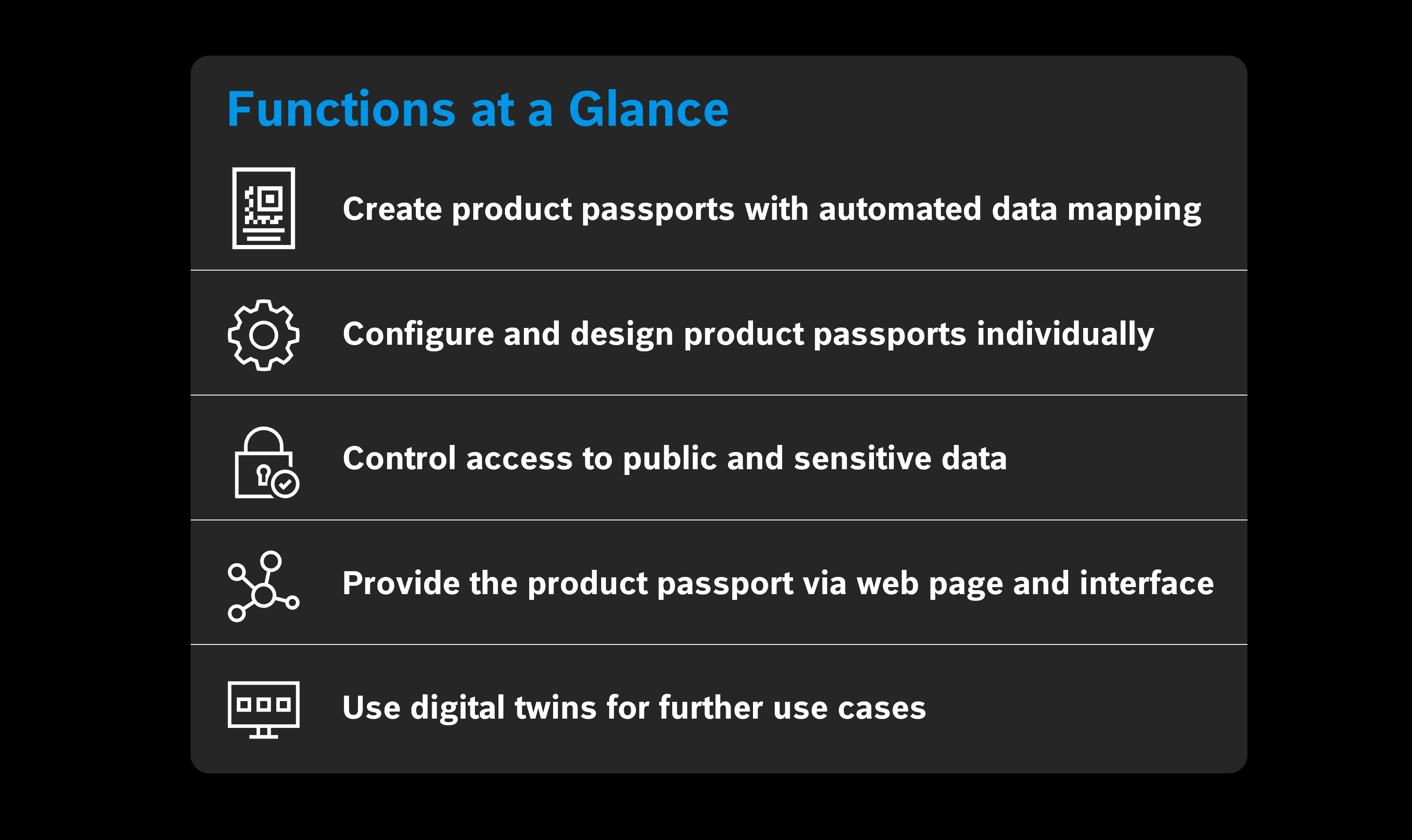
Create product passports with automated data mapping
Existing product data is mapped to the requirements of the product passport through automated data mapping. The Digital Product Passport then creates the passport automatically, based on digital twins that follow industry standards. This reduces manual work and avoids duplicate data storage. Authorized stakeholders receive consistent, traceable information across the product lifecycle.
-
Configure and design product passports individually
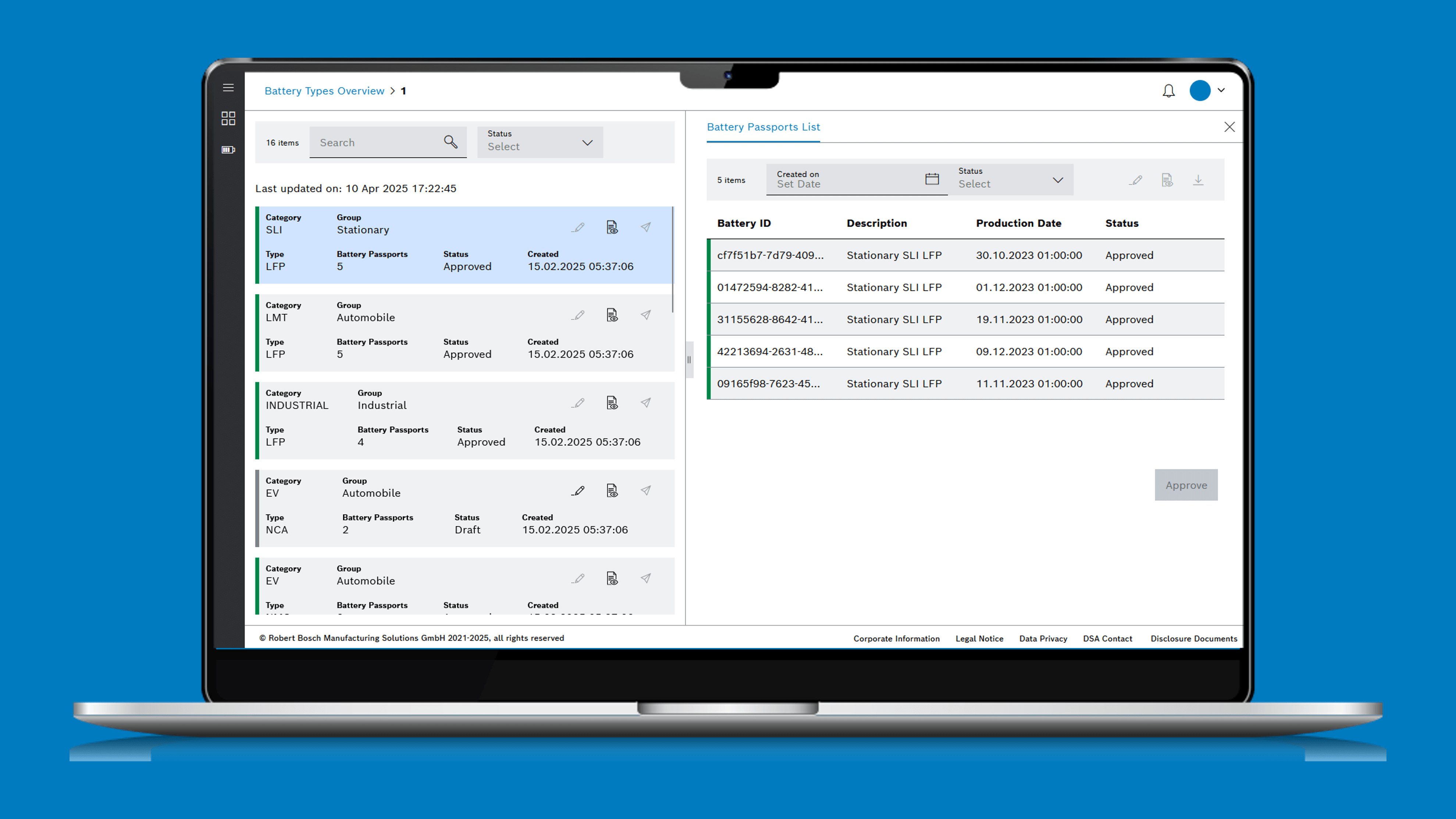
For each product type, it is defined which information the product passport contains, which details are mandatory and which optional data customers add. New product types and changed requirements can be implemented quickly, and the passport’s web page is generated automatically. With the Theme Configurator, customers adapt the appearance of their product passports to their own design, individually per configuration.
-
Control access to public and sensitive data
Differentiated access rights define which data is publicly accessible and which is made available only to persons with a legitimate interest, such as recyclers. Public information and sensitive data stay clearly separated.
-
Provide the product passport via web page and interface
The product passport can be retrieved via a URL that manufacturers store on the product, for example as a QR code or NFC tag. End users and authorized stakeholders see it there as a clear web page with tabs, tables and lists. Depending on the product type, it shows, for example, product information, manufacturer details and sustainability data such as carbon footprint or recycled content. The passport is also available in machine readable form via a standardized interface.
-
Use digital twins for further use cases
The Digital Product Passport is not limited to the product passport. The digital twins it builds on can be used for further use cases across the entire product lifecycle. Data, once built up, can be reused many times.
