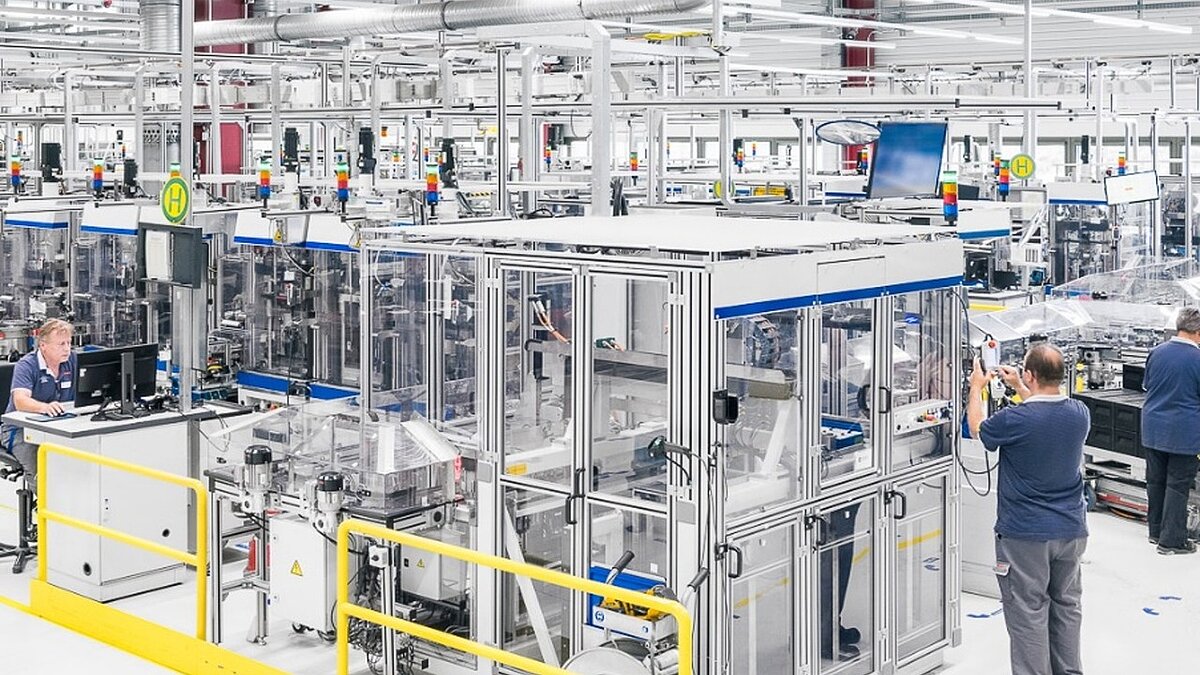
The Reality Check on the Production Line: Where AI Hype Meets the Shopfloor
Unplanned machine downtime and complex malfunctions are among the most costly challenges in industrial production. When an unexpected fault occurs on a highly synchronized production line, tacit experiential knowledge often determines how long the outage lasts. Yet this knowledge is frequently fragmented across countless PDF manuals, isolated ticket archives, historical maintenance reports, and the minds of individual specialists. Every minute of downtime reduces overall equipment effectiveness (OEE), jeopardizes delivery deadlines, and increases pressure on shift personnel.
It is precisely at this interface that agentic artificial intelligence (Agentic AI) promises a qualitative leap beyond traditional analytics dashboards. Autonomous AI agents no longer function merely as passive data displays; they actively interact with systems. They connect real-time control signals with technical documentation, conduct guided fault diagnoses, and support maintenance technicians with tailored recommendations for action directly at the terminal.
Despite this significant potential, industrial practice presents a sobering picture. Many AI initiatives fail to progress from pilot project to regular productive operation. They often end up in what is known as the do-it-yourself trap (DIY trap): committed development teams build isolated prototypes that impress in the lab but fail to meet the requirements, security specifications, useability, and workflows of a global production network.
Industrial AI rarely fails because of shortcomings in the underlying language models. Rather, it is a structural integration problem. Pure IT solutions that are not anchored in manufacturing logic create uncontrollable black-box systems that are rejected by shopfloor personnel as well as by those responsible for quality and safety. The central question for plant managers and industrial decision-makers is therefore how AI architectures must be designed to fit seamlessly and controllably into highly standardized production processes.

The challenge - where AI hype meets the shopfloor
Where AI hype meets industrial reality, reliable data, controllable systems, and scalable integration are what matter.
Bridging the Architectural Gap: Lean Principles as AI Design Patterns
Making artificial intelligence robust, secure, and scalable in the factory does not require a radical break with established methods. The most effective answer lies in the principles that have made manufacturing networks highly efficient and resilient for decades: the methods of lean management and modern production systems.
By methodically translating the classic pillars of manufacturing excellence into software and data architectures, theoretical AI concepts become reliable tools for everyday production.
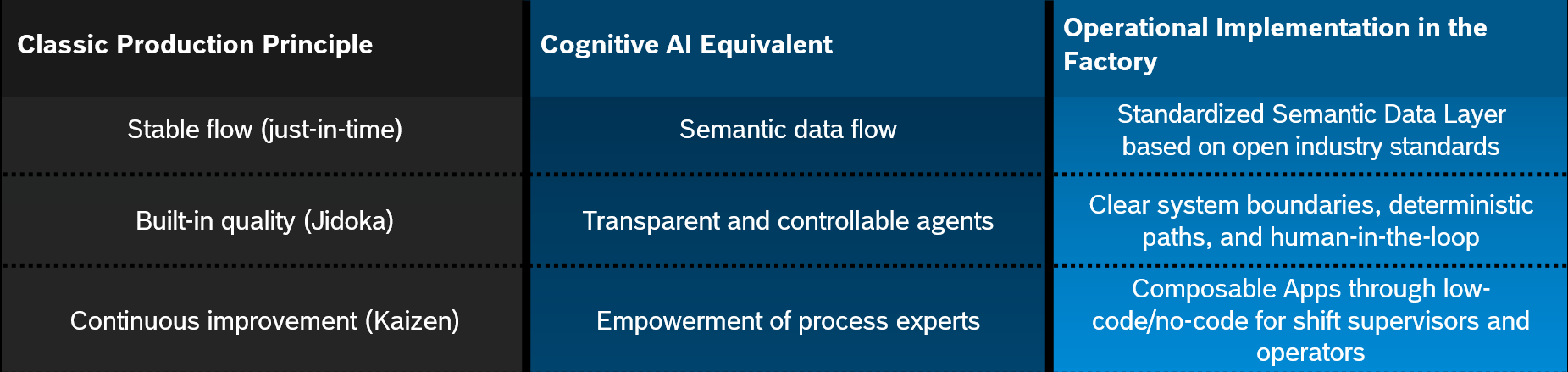
This is precisely the approach pursued by Bosch Connected Industry. Instead of treating AI as an isolated technology, Bosch transfers proven principles from the Bosch Production System to modern data and agent architectures. This creates solutions that can be deployed in a controlled, scalable, and production-oriented way.
1. From Material Flow to Data Flow: The Semantic Data Layer
In the classic lean approach, uninterrupted material flow without buffer inventory or friction losses is the overriding objective. Exactly the same principle applies to the information flows required by agentic AI. An AI agent cannot navigate reliably through unstructured data lakes and fragmented silos spanning MES, ERP, programmable logic controllers (PLCs), and CAQ systems. Without semantic context, language models are prone to hallucinations that can cause serious quality issues and equipment damage in production environments.
Put simply, an AI agent does not need as much data as possible; it needs the right data in the right context. Only when machine, quality, and process information is clearly described and interconnected can AI agents provide sound recommendations and reliably support decisions.
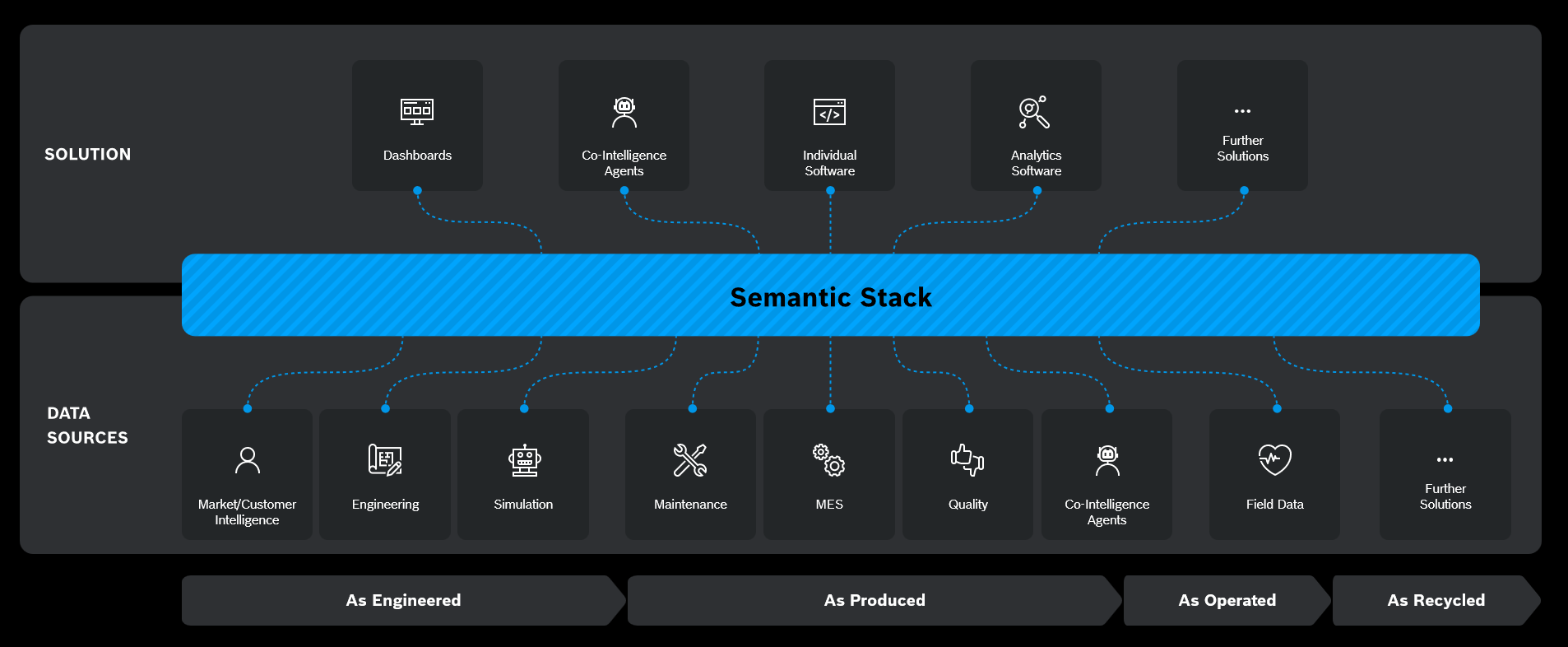
The foundation is a standardized Semantic Data Layer. It contextualizes raw data from the machinery using established industry standards such as OPC UA and semantic information models, for example the Asset Administration Shell (AAS).
This enables an agent to understand the precise physical and process-related meaning of every measured variable, regardless of manufacturer. It accurately maps signals and parameters to the product’s lifecycle phases - from design (As Engineered) through manufacturing (As Produced) to operational use (As Operated). This semantically organized data flow eliminates errors at the source and provides AI with verified facts rather than imprecise estimates.
Semantic Data Layer and connected data flow
From material flow to data flow: A semantic layer connects industrial data sources and creates reliable context for AI agents.
2. Built-in Quality: Jidoka and Graduated Autonomy
On the production line, the Jidoka principle stands for automatically detecting anomalies, stopping immediately when quality deviations occur, and preventing errors in a targeted way (Poka Yoke). Translated into software architectures, this means uncompromisingly opening up the algorithmic black box. Industrial agents must not be uncontrolled autopilots; they must operate within strictly auditable guardrails.
In practice, a three-level autonomy model balances technological relief with operational safety:
- Level 1 – Assistance and analysis: The agent aggregates sensor readings, compares fault messages with repair histories, and searches manuals to provide the operator with a sound root-cause analysis.
- Level 2 – Guided intervention (human-in-the-loop): For process-relevant corrections or parameter adjustments, the agent recommends the optimal action, but execution at the controller only takes place after explicit approval by authorized operating personnel.
- Level 3 – Automated routine processes: The system independently handles non-critical supporting tasks in the background, such as complete documentation of actions performed or the creation of structured shift-log entries.
This transparent division ensures that process responsibility always remains with qualified professionals while eliminating time-consuming manual research and documentation effort.
3. Kaizen on Site: Operators and Engineers as Co-Creators
A genuine continuous improvement process always originates where value is created. If process engineers or maintenance technicians must engage central IT development teams for every optimization of an inspection workflow and wait through months-long release cycles, Kaizen comes to a standstill.
The proven answer is modular, composable applications (Composable Apps). Visual no-code and low-code environments enable operators and shift supervisors to become co-creators of their own digital tools. Using drag-and-drop, they connect prepared data nodes, tool libraries, and specialized AI agents into tailored workflows.
This approach decisively strengthens acceptance of digitalization initiatives. Employees experience the technology not as a rigid requirement imposed from outside, but as an adaptable assistant that they can configure themselves for their specific machine and continuously refine.
Bosch Connected Industry combines decades of experience from its own manufacturing operations with modern data and AI technologies. The combination of Semantic Data Management, shopfloor solutions, and Agentic AI lays the foundation for manufacturing co-intelligence at industrial scale.
Measurable Impact: Industrial Co-Intelligence in Real-Time Operations
When agentic AI is embedded according to these principles as a natural part of the production system, it evolves from an experimental cost factor into a highly effective productivity lever.
Practical deployments in highly synchronized factories demonstrate measurable business effects:
- Up to 50 percent faster troubleshooting (MTTR): Because time-consuming manual searches through static PDF documents and fragmented ticket archives are eliminated, maintenance technicians have immediate access at the line to all relevant root-cause analyses.
- 5 to 15 percent higher overall equipment effectiveness (OEE): Guided parameterization, the prevention of operating errors, and shorter changeover times measurably increase productive output.
- Up to 30 percent lower operational process costs: Automated documentation relieves specialists of administrative routines, while standardized maintenance paths substantially reduce unplanned downtime.

Practice and human-machine collaboration: human in the loop
Industrial co-intelligence: AI provides context and support, while people retain judgment, control, and responsibility.
Conclusion: The Future Belongs to Manufacturing Co-Intelligence
The industrial AI transformation has reached a turning point. The initial hype is giving way to a sober assessment of actual operational value. The winners of the coming decade will not be the companies that write the most software code themselves or pilot isolated niche chatbots.
Sustainable success depends on mastering the interface between advanced algorithms and established manufacturing processes. Organizations that build on a standardized semantic data foundation, establish rigorous quality and control mechanisms, and empower their process experts on site can bring the complexity of AI under control. The result is industrial co-intelligence: a production system in which people and AI deliberately combine their respective strengths. The future of manufacturing does not belong to autonomous machines alone, but to intelligent collaboration among people, data, and AI.